
Month: March 2026

How to Create Entry Rules for Trades and Accumulation Rules for Investments
admin - March 31, 2026Understanding Entry Rules for Trades Establishing structured and testable entry rules is a foundational requirement for consistent trading performance. Entry rules define the precise market conditions under which a trader initiates a position. Without clearly articulated rules, decision-making tends to become inconsistent and reactive, which introduces unnecessary variability into outcomes. Entry criteria function not only

The Role of Cash Management in Trading and Investing Portfolios
admin - March 27, 2026The Introduction to Cash Management Cash management is a foundational discipline within both trading and investing portfolios. It refers to the structured oversight of cash balances, cash flows, and near-cash assets to ensure that capital is available when needed and productively deployed when not immediately required. In practical terms, it bridges the gap between strategic

How to Use Watchlists Differently for Traders and Investors
admin - March 22, 2026Introduction Watchlists are a foundational component of market participation for individuals and institutions alike. Whether one engages in frequent short-term transactions or builds positions with a multi-year horizon, the ability to systematically monitor selected financial instruments is essential. A watchlist functions as a structured collection of assets—such as stocks, exchange-traded funds, commodities, currencies, or bonds—that

How to Define Time Horizon Before Choosing a Trading or Investing Strategy
admin - March 17, 2026Understanding Time Horizon in Trading and Investing Time horizon is a foundational concept in both trading and investing. It refers to the length of time an individual expects to hold an investment before accessing the capital. While the idea appears straightforward, its implications are extensive. Time horizon affects asset allocation, portfolio construction, liquidity management, tax

A Practical Framework for Allocating Capital Between Trading and Investing
admin - March 12, 2026Introduction In the world of finance, individuals and institutions are continuously required to make decisions about how to allocate capital in a way that aligns with their objectives, constraints, and expectations. The central question often revolves around whether resources should be directed toward trading, investing, or a structured combination of both. Although these terms are
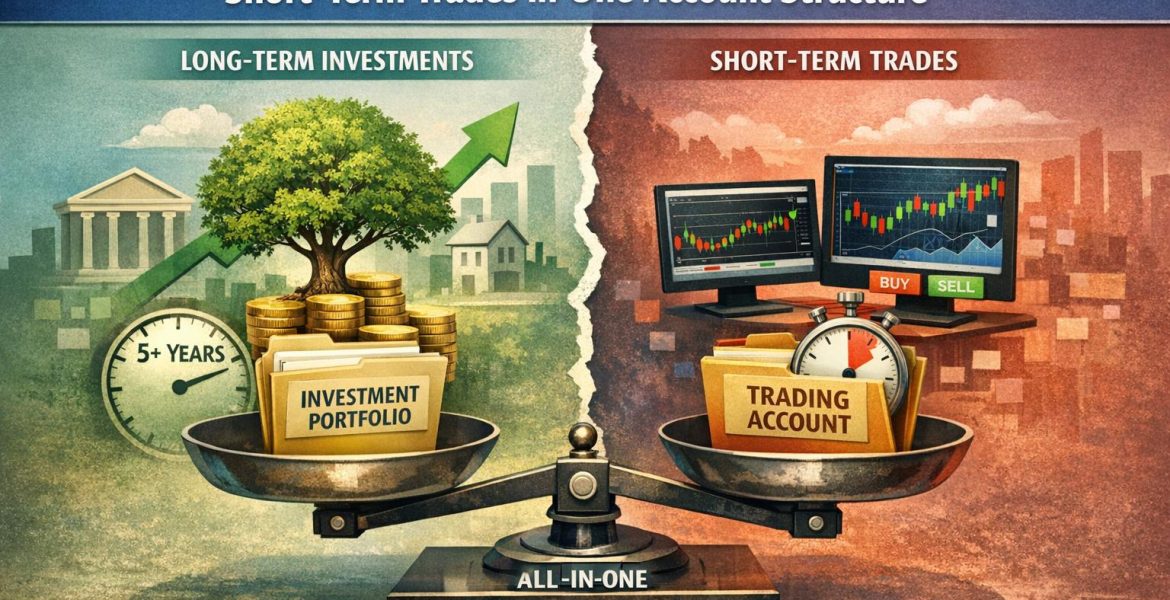
How to Separate Long-Term Investments From Short-Term Trades in One Account Structure
admin - March 7, 2026Understanding Investment and Trading Strategies Managing long-term investments and short-term trades within a single account structure requires a clear conceptual framework and disciplined execution. Although both approaches involve buying and selling financial instruments such as stocks, bonds, exchange-traded funds, or derivatives, they are built on different time horizons, analytical methods, and performance expectations. Understanding these

Trading vs. Investing: How to Decide Which Approach Fits Your Personality
admin - March 2, 2026Understanding the Difference When deciding between trading and investing, it is essential to understand the structural and practical differences between the two approaches. Although both involve participation in financial markets and aim to generate returns, their methods, time horizons, analytical frameworks, and psychological demands differ significantly. A clear understanding of these distinctions allows individuals to

How to Build a Portfolio That Supports Both Investing and Active Trading Goals
admin - March 2, 2026Understanding the Basics of a Dual-Purpose Portfolio A dual-purpose portfolio is structured to accommodate both long-term investing and active trading within a single framework. This approach recognizes that capital can be deployed differently depending on time horizon, return expectations, and acceptable levels of volatility. Rather than choosing between a passive strategy and a short-term strategy,