
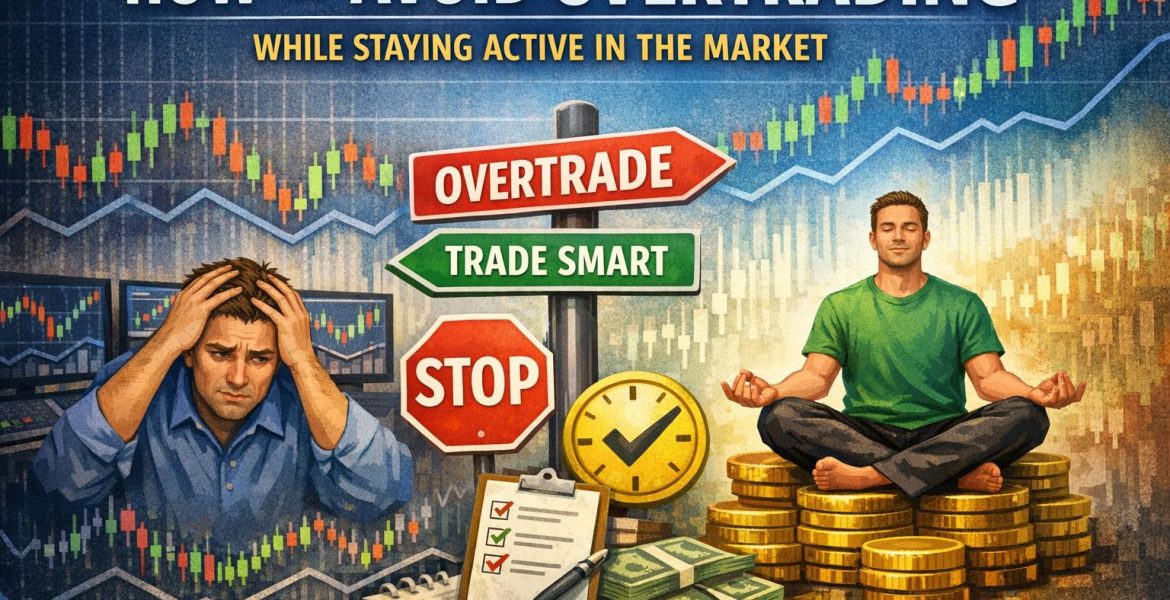
How to Avoid Overtrading While Staying Active in the Market
admin - July 13, 2026Understanding Overtrading
Overtrading occurs when an investor or trader executes an excessive number of trades within a defined period, often without a corresponding improvement in portfolio performance. While active participation in financial markets is a legitimate strategy, overtrading reflects a pattern where frequency supersedes strategy. This behavior can significantly erode returns through transaction costs, tax inefficiencies, and increased exposure to poorly timed decisions.
In modern financial markets, where trading platforms provide instant execution and continuous access to global assets, the risk of overtrading has increased. Low commissions and mobile technology can create an environment where transactions feel inconsequential. However, even minimal fees, when compounded over hundreds of trades, can materially affect net returns. In addition to direct costs, overtrading may reduce strategic clarity, disrupt long-term asset allocation plans, and amplify exposure to volatility.
A disciplined approach to trading emphasizes quality over quantity. Markets present continuous opportunities, yet not every price movement warrants action. Sustainable outcomes depend less on constant activity and more on the consistent execution of a well-defined plan.
The Financial Impact of Excessive Trading
Overtrading affects performance through both explicit and implicit costs. Explicit costs include brokerage commissions, exchange fees, and spreads between bid and ask prices. Although many platforms advertise low or zero commissions, traders still incur spread costs, slippage, and occasional financing expenses related to margin use.
Implicit costs are less visible but equally important. Frequent buying and selling may trigger short-term capital gains taxes, which are often higher than long-term rates in many jurisdictions. Additionally, repeated entries and exits can reduce the benefits of compound growth. By interrupting compounding cycles, traders may inadvertently limit long-term capital appreciation.
Market timing errors also contribute to underperformance. Research in behavioral finance has shown that traders who attempt to capitalize on short-term price movements often miss the strongest days of market growth. Missing a limited number of key trading sessions can significantly reduce long-term returns. Overtrading increases the probability of being out of the market at critical moments.
Distinguishing Active Trading From Overtrading
It is important to distinguish between legitimate active trading strategies and overtrading. Professional day traders, quantitative analysts, and algorithmic trading firms often execute large volumes of trades under structured risk management systems. In these contexts, high trading frequency is aligned with defined models, capital requirements, and risk controls.
Overtrading differs because it lacks proportional strategic justification. A trader may increase transaction frequency without improving the statistical edge of their system. Instead of following signals derived from tested methodologies, the trader reacts to short-term noise. When the volume of trades exceeds the rationale provided by the underlying strategy, overtrading becomes evident.
A helpful benchmark involves consistency. If trading frequency fluctuates dramatically in response to recent wins or losses, this may indicate reactive behavior rather than structured execution. Sustainable trading activity typically reflects stable rules rather than fluctuating impulses.
Identifying the Causes of Overtrading
There are multiple drivers behind excessive trading activity. These causes often combine psychological tendencies with structural factors such as access to leverage or market volatility. Understanding these influences is essential for maintaining discipline.
Emotional Influence
One of the primary causes of overtrading is emotion-driven decision-making. Traders may experience FOMO when observing rapid price movements or hearing reports of significant gains achieved by others. This perception of missed opportunity can create urgency, leading to impulsive entries without sufficient analysis.
Similarly, the desire to recover losses can result in increased trading frequency. After a losing trade, some individuals attempt to compensate quickly by entering new positions with insufficient evaluation. This pattern, sometimes described as revenge trading, increases exposure without improving the probability of success.
Greed can also influence decision-making. When a sequence of profitable trades builds confidence, traders may increase position size or shorten analysis time. While confidence is not inherently problematic, overconfidence can weaken adherence to predefined rules. The result is a higher level of market engagement without appropriate safeguards.
Cognitive biases compound these issues. Confirmation bias may lead traders to seek information that validates existing positions, while availability bias emphasizes recent market events over broader historical performance. These influences can encourage unnecessary trade execution.
Complex Strategies
Utilizing complex trading strategies without comprehensive understanding can result in misapplication and excessive adjustments. Financial markets offer a wide range of instruments, including derivatives, leveraged products, and structured securities. Engaging with these tools without complete knowledge can lead to confusion regarding risk exposure.
Complex strategies often involve multiple indicators or conditional rules. Traders may alter parameters frequently in response to short-term movements, believing that constant optimization improves outcomes. However, frequent modifications can undermine the statistical reliability of a system. Instead of allowing the strategy to perform across a representative sample of trades, the trader interrupts its natural course.
Excessive reliance on technical indicators can also contribute to overtrading. When charts display numerous signals, traders may interpret minor fluctuations as actionable opportunities. Without a hierarchy of signal strength or clear filtering criteria, the number of trades may expand beyond reasonable levels.
Access to Leverage and Technology
Margin accounts and derivative products provide increased buying power, enabling traders to control larger positions with limited capital. While leverage can enhance returns under favorable conditions, it also magnifies losses. The availability of leverage may encourage more frequent trading due to the perception of amplified opportunity.
Technology further accelerates trading behavior. Real-time data feeds, algorithmic alerts, and mobile notifications create constant awareness of market movements. This continuous stream of information can reduce the natural pause that once existed between market sessions. Without defined boundaries, traders may respond to each fluctuation.
Online educational resources and financial analysis platforms, such as Investopedia, expand access to information, which can improve knowledge when used effectively. However, exposure to continuous commentary and diverse strategies may also prompt experimentation without adequate evaluation. Education must be applied systematically to prevent unnecessary activity.
Strategies to Avoid Overtrading
Preventing overtrading does not require withdrawal from the market. Instead, it involves implementing structured processes that balance engagement with restraint. Effective strategies rely on planning, evaluation, and disciplined execution.
Create a Trading Plan
A comprehensive trading plan provides a framework for decision-making. This document outlines entry criteria, exit strategies, position sizing rules, and risk tolerance thresholds. By specifying these factors in advance, traders reduce the likelihood of spontaneous decisions.
An effective plan defines measurable conditions for entering a position. For example, the criteria may require confirmation from specific technical patterns, fundamental metrics, or macroeconomic indicators. When these conditions are absent, no trade is executed. This structure limits discretionary impulses.
Risk management parameters are equally important. A trading plan should identify the maximum percentage of capital allocated to a single trade and establish stop-loss levels aligned with volatility and asset characteristics. By codifying these constraints, traders reduce the temptation to expand exposure during uncertain conditions.
Periodic strategy review is built into the plan rather than triggered by short-term outcomes. Scheduled evaluations preserve objectivity and prevent frequent, reactionary changes.
Regular Self-Assessment
Frequent self-assessment enables traders to measure performance against predefined standards. Maintaining a detailed trading journal encourages accountability. Each entry may include the rationale behind the trade, risk parameters, emotional state at the time of execution, and post-trade reflections.
Over time, patterns emerge from this documentation. Traders can identify whether increased trade frequency correlates with diminishing returns or elevated stress. Quantitative metrics such as win rate, average gain, average loss, and risk-reward ratio provide objective evidence.
Self-assessment involves examining behavioral consistency. If the majority of trades align with documented criteria, discipline remains intact. If deviations increase during volatile periods or after losses, this trend signals potential overtrading.
Structured reflection reduces reliance on memory, which can be selective or biased. By confronting data directly, traders are better positioned to adjust behavior constructively.
Set Specific Trading Goals
Clear and realistic goals provide direction. Instead of focusing exclusively on profit targets, traders may define process-oriented objectives. For example, a goal may involve executing only trades that meet predefined criteria or limiting the number of trades per week.
Goals should align with overall financial plans and time horizons. Short-term traders may measure performance monthly, while long-term investors may adopt quarterly or annual benchmarks. Consistency between objectives and strategy reduces the pressure to seek immediate results through additional trades.
Performance expectations must reflect market conditions. In low-volatility environments, opportunities may naturally decline. Attempting to maintain previous levels of activity in quieter markets can encourage unnecessary trades. Flexible expectations grounded in research help moderate behavior.
Education and Continuous Learning
Continuous learning strengthens decision-making. Structured education enhances understanding of financial instruments, risk dynamics, and macroeconomic influences. Reliable resources, including established financial publications and academic research, contribute to informed analysis.
However, learning must be integrated systematically. A disciplined approach involves testing new strategies in simulated environments before deploying capital. Paper trading or backtesting strategies across historical data allows evaluation without financial risk.
Understanding statistical variance also moderates trading frequency. Even well-designed strategies experience periods of underperformance. Recognizing that short-term losses do not necessarily invalidate a system reduces the impulse to increase activity prematurely.
Continuous education supports stability by reinforcing the rationale behind strategic decisions. Knowledge decreases reliance on rumor or short-term sentiment.
Incorporating Technology
Technology can either encourage overtrading or support discipline, depending on usage. Automated alerts and pre-programmed orders allow traders to define execution parameters in advance. Stop-loss and take-profit orders enforce predetermined exit levels without requiring constant monitoring.
Algorithmic tools may restrict trading frequency by limiting the number of trades per session. By embedding constraints within software, traders reduce discretionary impulses. Performance analytics platforms further assist in measuring trade distribution, average holding periods, and cost efficiency.
Risk management dashboards provide real-time updates on portfolio exposure. Understanding overall leverage and sector concentration prevents incremental additions that accumulate into excessive risk.
Importantly, traders may set periods of restricted trading, such as avoiding activity during major news announcements or outside designated hours. Technology can facilitate these rules by disabling execution or limiting leverage during predetermined windows.
Long-Term Perspective and Behavioral Stability
Maintaining a long-term perspective reduces the inclination toward excessive activity. Financial markets fluctuate continuously, yet structural growth trends unfold over extended time horizons. Investors who anchor their decisions to strategic allocation models rather than daily fluctuations often experience fewer temptations to act impulsively.
Behavioral stability is strengthened by routine. Fixed review schedules, consistent analysis methods, and predefined criteria create predictability. When trading becomes procedural rather than reactive, frequency aligns more closely with genuine opportunity.
Peer comparison can contribute to overtrading. Observing reported gains from others may prompt unnecessary shifts in strategy. Establishing individualized benchmarks tailored to personal risk tolerance and capital structure mitigates these influences.
Professional guidance may also support discipline. Financial advisors or risk managers provide external perspectives that challenge impulsive behavior. Independent review introduces accountability beyond self-assessment.
Conclusion
Avoiding overtrading is essential for sustainable market participation. Excessive trading frequency can diminish returns through transaction costs, tax inefficiencies, and exposure to avoidable risk. While access to technology and information has increased market accessibility, it has simultaneously amplified the potential for reactive decision-making.
Understanding the causes of overtrading, including emotional influences, strategic complexity, leverage, and constant market exposure, provides a foundation for corrective action. By implementing structured trading plans, engaging in regular self-assessment, setting realistic and process-oriented goals, pursuing disciplined education, and employing technology strategically, traders can balance activity with restraint.
Financial markets reward consistency and informed decision-making over impulsive execution. A measured approach, grounded in clear criteria and ongoing evaluation, allows traders to remain active participants without compromising long-term objectives. Through disciplined structure and continuous improvement, market engagement can remain purposeful rather than excessive.
This article was last updated on: July 13, 2026